
How to Choose the Right Battery Charger Voltage | 12V–80V Guide
Choosing the right battery charger voltage is critical for safety and battery life. This guide explains 12V, 24V, 36V, 48V, 72V, and 80V systems, how to read battery nameplates, cell counts, and why voltage matching matters when using PBM or other industrial chargers.
Published May 6, 2026 · Updated May 8, 2026
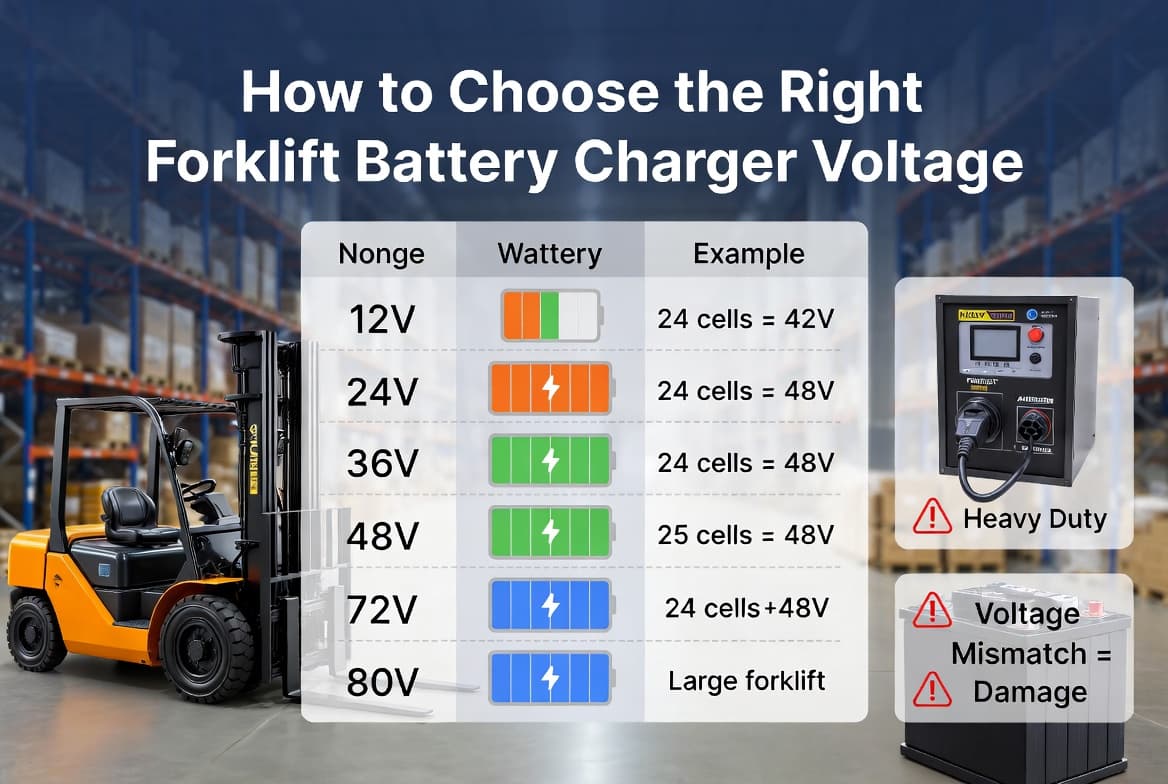
How to Choose the Right Battery Charger Voltage
Quick Answer
The battery charger voltage must exactly match your battery voltage. A 24V battery needs a 24V charger, a 48V battery needs a 48V charger, and so on. Using the wrong voltage can damage the battery, damage the charger, cause overheating, reduce battery life, or trigger faults. PBM industrial chargers are available in common industrial voltages including 12V, 24V, 36V, 48V, 72V, and 80V, making them a practical choice for many warehouses and equipment dealers.
Why Battery Charger Voltage Matters
batteries come in different voltages depending on the machine’s size, power requirements, and application. The charger must be specifically designed for that voltage.
Using the wrong voltage affects:
Safe charging performance
Charging cycle control
Battery temperature during charge
Overall battery lifespan
Charger safety and reliability
A charger with too low voltage won’t fully charge the battery. A charger with too high voltage can overcharge, overheat, or permanently damage the battery.
Common Battery Voltages
12V Battery Chargers
Used for smaller industrial batteries, specialty equipment, and some low-voltage applications. Not all chargers support 12V — always check the model specifications.
24V Battery Chargers
Common for pallet jacks, walkie stackers, and smaller warehouse equipment.
36V Battery Chargers
Often found in older electric forklifts and mid-size material handling machines.
48V Battery Chargers
One of the most popular voltages for modern electric forklifts, reach trucks, and warehouse equipment.
72V Battery Chargers
Used for heavier-duty equipment requiring more power.
80V Battery Chargers
Designed for large electric forklifts and high-demand, multi-shift warehouse fleets.
How to Find Your industrial Battery Voltage
Check the battery nameplate — Most batteries clearly list the voltage (12V, 24V, 36V, etc.).
Count the cells (for lead-acid batteries):
12 cells = 24V
18 cells = 36V
24 cells = 48V
36 cells = 72V
40 cells = 80V
Check the specifications or service manual.
When in doubt, consult a qualified technician.
Never guess the voltage. Mismatching is one of the most common and costly mistakes.
Charger Voltage Must Match Battery Voltage
Rule #1: The charger’s output voltage must equal the battery voltage. Even if the connector fits, it does not mean the charger is compatible. Connectors can be swapped or reused, so always verify voltage first.
Other Important Charger Specifications to Check
Voltage is only the starting point. Also verify:
Output amperage (must suit battery Ah capacity and desired charge time)
Battery chemistry (flooded lead-acid, AGM, gel, or lithium)
Input power (single-phase or three-phase)
AC input voltage compatibility
Connector type and polarity
Charge profile and equalize function (for flooded batteries)
Cable length and condition
Lead-Acid, AGM, Gel, and Lithium Considerations
Most PBM and industrial chargers are built for flooded lead-acid traction batteries. Some models support AGM or gel, but lithium batteries usually require special chargers with BMS communication. Never use a standard lead-acid charger on a lithium battery without proper compatibility.
Signs You’re Using the Wrong Charger Voltage
Watch for these warning signs:
Charger does not start or immediately faults
Battery becomes excessively hot
Charging takes much longer than normal
Battery never reaches full charge
Strong sulfur smell (flooded batteries)
Blown fuses or overheating cables/connectors
Reduced battery runtime after charging
If you notice any of these, stop charging immediately and verify the voltage match.
Why PBM Chargers Are a Good Option
PBM forklift chargers are popular because they are:
Available in all major industrial voltages
Practical and serviceable for warehouses and repair shops
Cost-effective compared to many OEM chargers
Reliable for both new and used forklift battery systems
They are especially useful for forklift dealers, battery rebuilders, and multi-voltage fleet operations.
Before Buying a Battery Charger
Always confirm the following:
Exact battery voltage
Battery amp-hour (Ah) capacity
Battery chemistry
Required output amperage
Available facility power (single or three-phase)
Connector type
Cable condition
Bottom Line
Choosing the right battery charger voltage is critical for safety, performance, and battery longevity. Always match the charger voltage to the battery voltage first, then verify amperage, chemistry, and other specifications. A properly matched PBM charger can deliver reliable, cost-effective charging for 12V through 80V forklift and warehouse equipment.
FAQ
Can I use a 48V charger on a 36V battery?
No. The voltage is too high and can damage the battery or charger.
Can I use a 36V charger on a 48V battery?
No. It will undercharge the battery and may cause faults.
Do all PBM chargers support 12V?
No. Only specific models support 12V. Always check the model plate.
What is the most common forklift battery voltage?
48V is the most common, followed by 24V, 36V, 72V, and 80V.
Is the connector enough to confirm compatibility?
No. Always verify voltage and other specs.
Related guides
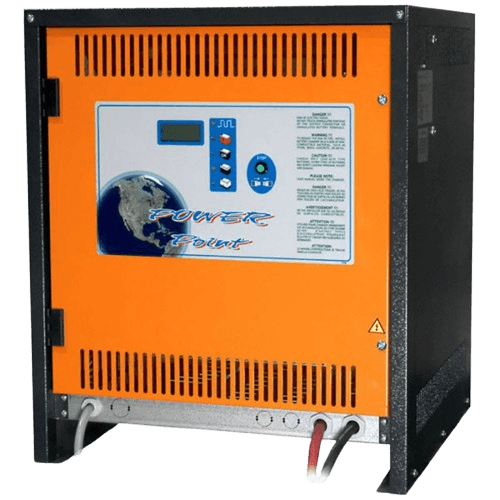 Why Buy PBM
PBM Chargers: What They Are, What They Can Do, and How They Compare
Learn what PBM chargers are, how they work, and why they’re a popular, cost-effective choice for warehouses and used equipment dealers. Full breakdown of voltages, features, and buying tips.
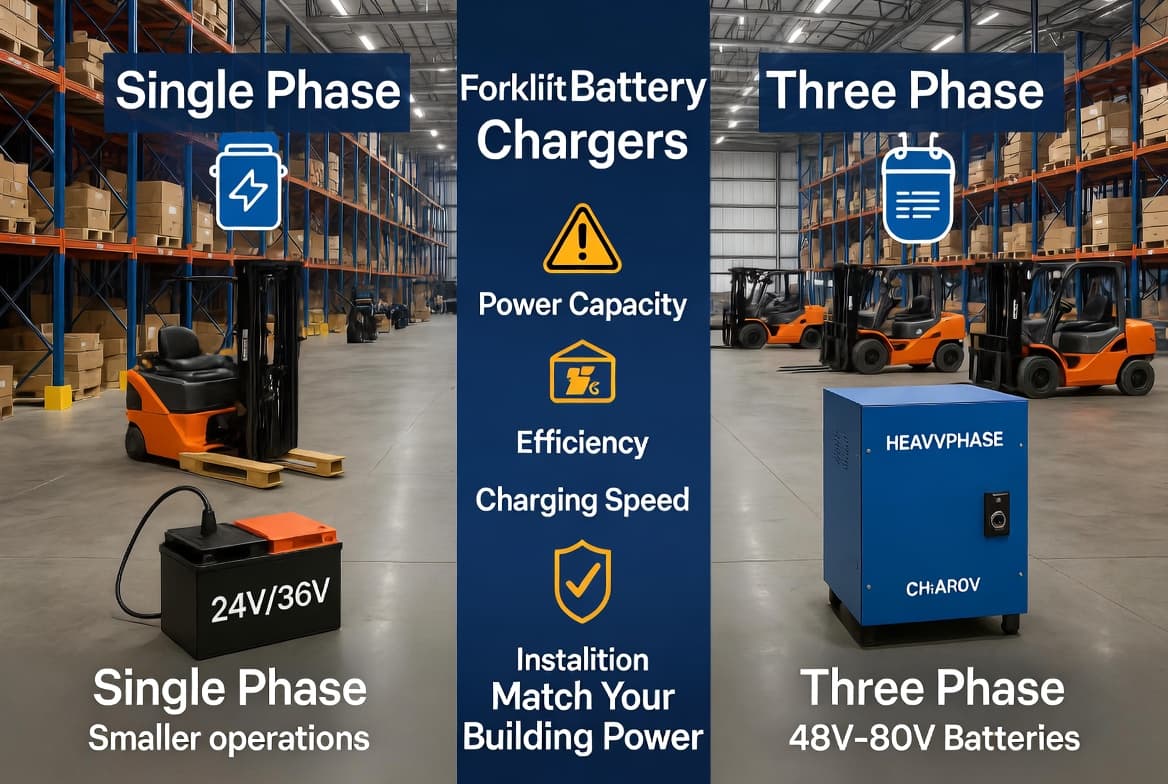 Why Buy PBM
Single Phase vs Three Phase Battery Chargers | Which One Do You Need?
Single phase vs three phase battery chargers — which is right for your warehouse? This guide explains power requirements, efficiency, charging speed, and how to choose the best option for your operation, including PBM charger recommendations.